
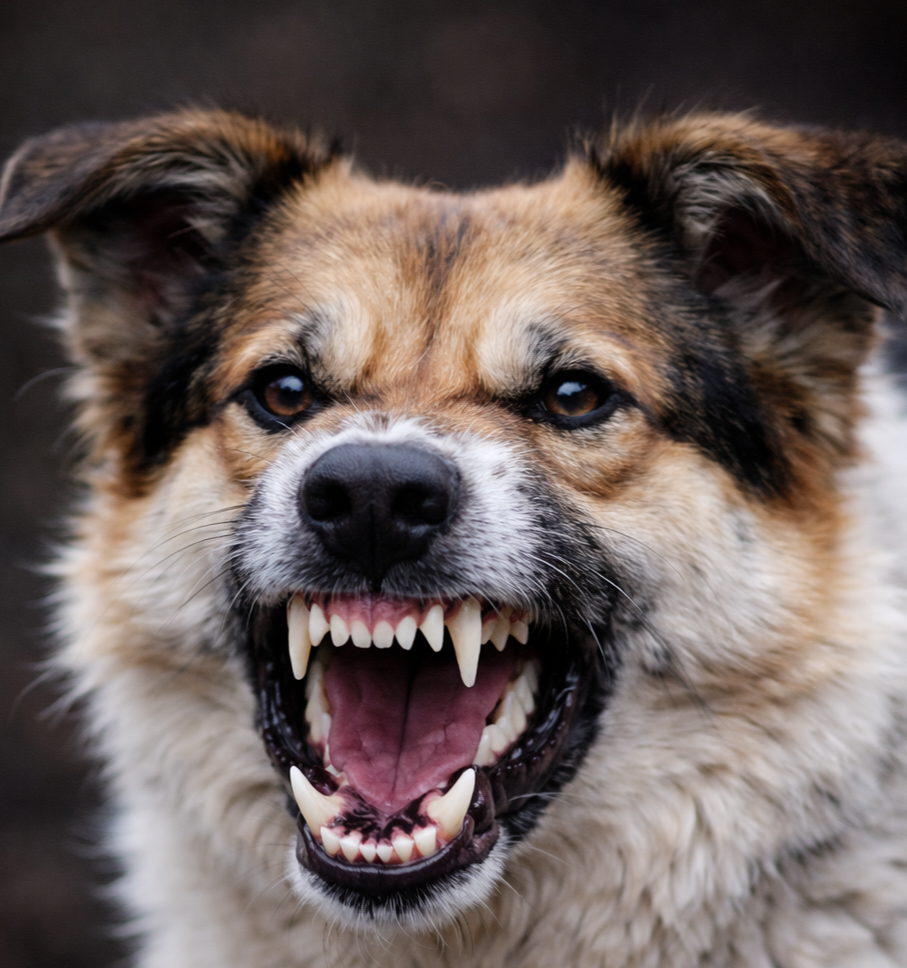
Dog / Dog Reactivity
Dog on dog interactions are made up with a chain of events. When considering dog reactivity, it is important to identify which bit of the chain is ‘broken’ and then work on improving that bit. Once this is strengthened, the rest of the chain should work.
Dog/Dog Reactivity
If your dog is having reactions to other dogs on your walk, see if you can observe the series of events in the lead up to, and during the interaction and identify which link of the chain is broken. That is the bit that needs training and learning so that your dog can interact better. Reactivity might only be hyper excitement or anxiousness, jumping up on back legs trying to get to the other dog, excessive pulling to get to the other dog.
The first thing to do initially until you can walk by another dog at distance and get some training in place is create distance. If your dog is reacting this way, you are too close. If another person walking their dog is coming towards you, try crossing the road and put yourself between your dog and the other person. If that is still too close, when you see another dog, just run your hand down the lead towards your dogs collar or harness, make a distraction noise such as ‘Bbbrrrp’ or say something like ‘Pivot’, turn into your dog, do a 180 degree turn and walk the other way.
Once you get the distance right and your dog is not jumping up on their hind legs or pulling to get to the dog. Remember to put yourself between your dog and the other person and their dog, observe your dog as you pass someone.
The chain of events in a dog/dog interaction are:
Your dog sees or senses another dog
Your dog moves towards the other dog
Head to head interaction
Dogs move to the rear to sniff
One of three things will happen……
Dogs sniff and move on
Dogs sniff and engage in appropriate play
Dogs sniff and engage in inappropriate play
Dogs disengage
Once you are in a position to observe your dog as you walk towards another dog, see if you can identify which step in the chain is broken. It could be the first step, seeing or sensing another dog may be too much for them but that doesn’t mean the rest of the chain wont work, you’ll probably find that the rest of the chain of events is intact once you repair the first step. You may find that your dogs social skills fall over at the Head to Head interaction, this can happen a lot in puppies as they haven’t yet learnt the social skills they need to complete the chain. They might not be able to move on to the rear end sniff and may just need help disengaging from the other dogs head .
Optimism helps a dog cope with another dog that might not be as skilled in the chain. Remember that dogs don’t have to interact with another dog to lead full and happy lives, dogs love interacting with humans. The more you expose your dog to other dogs, the more likely that something negative will happen. Dogs personalities are all different as well, so a dog may have a preference that playing with another dog isn’t really their thing. Imagine you are in introvert and how you feel at a crowded noisy party where you don’t know anyone and people are pushing you to interact with other people, it’s just not some people’s cup of tea, dogs are the same. All that is really needed is to make sure your dog is okay with another dog at distance, you can always manage how far away you are from another dog by moving away or taking a different route.
If walking isn’t really an option right now because your dog is too reactive to other dogs, while you work on training optimism, confidence, disengagement and focus on you, just find 5 other ways to exercise your dog so they get an energy release. This could be swimming, playing games in the house or in the yard, hiring a sniff space, going to friends or families back yard, training or doing something like Hoopers which can cater for dogs that need space. If your dog is already highly aroused for some reason, it is probably best not to expose them to another dog on that day.